
Most leadership teams care deeply about their workplace culture. Most also struggle to see it clearly. Here’s a tool that can help.

Leadership teams often sense when culture is drifting, but struggle to name what’s happening or decide what to do next. The Culture Compass provides a simple, visual way to make those conversations clearer, more honest, and more actionable.
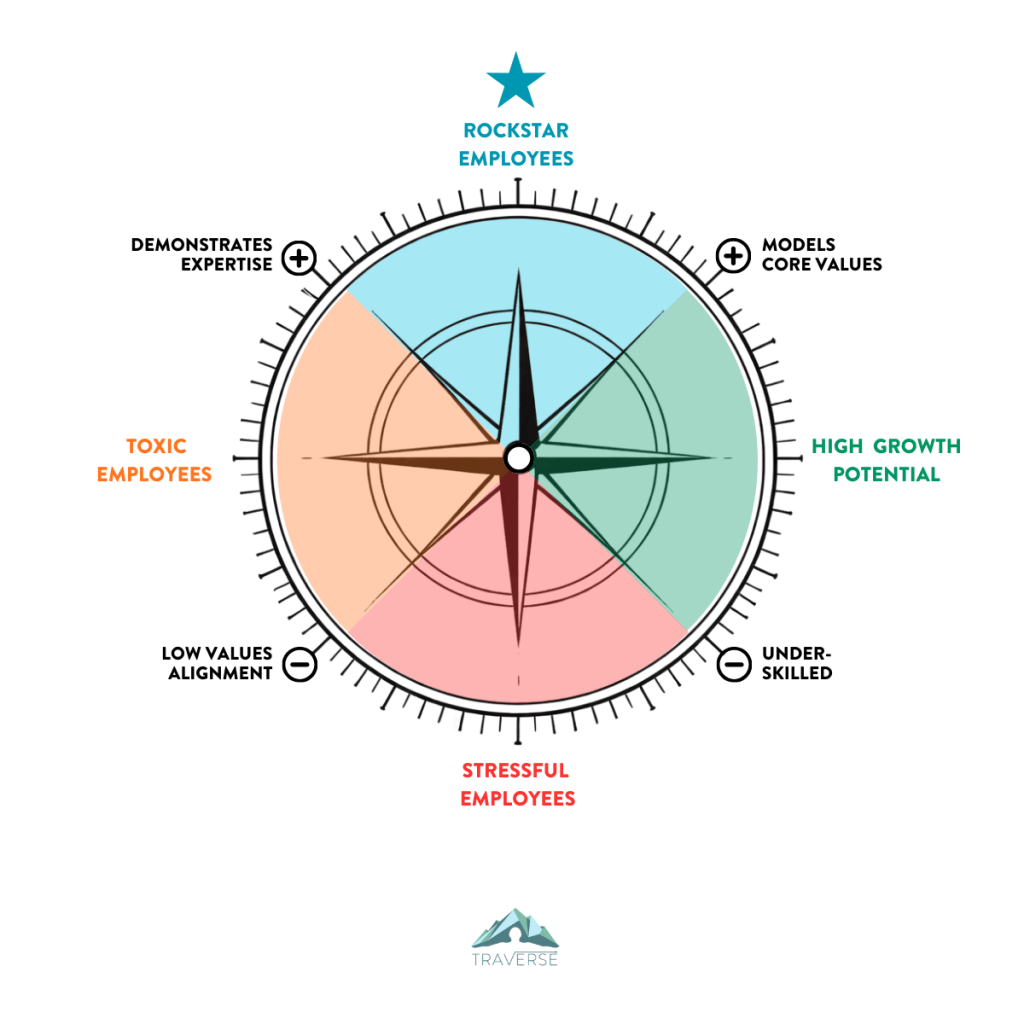
At its core, the Culture Compass plots team members along two dimensions: role competence (under-skilled → expert) and core values alignment (low → high). By placing each person where they best fit, leadership teams can see patterns that are often invisible.
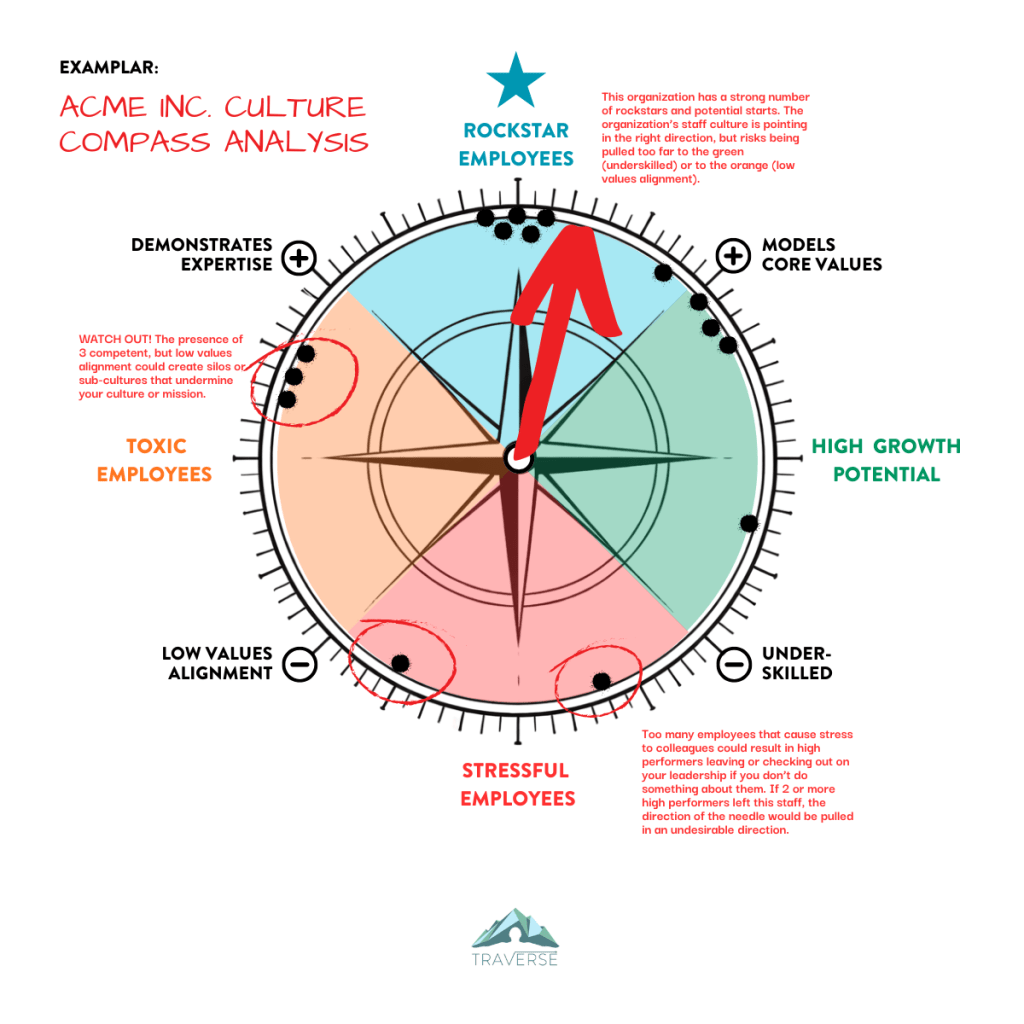
We’re indebted to leaders like Trevor Throness who have helped us refine how we assess our culture. This helpful tool is not particularly original, but what we like about the “compass” when compared to other similar tools, is that it (a) points in the direction your culture is heading, but also (b) shows what other magnetic influences might pull your needle away from your desired direction.
On the document we’ve described what misalignment or under-skilled looks like because those descriptors are general regardless of role or job description. We haven’t described what expertise or values look like because they are different from role to role or organization to organization.
How a Leadership Team Might Use The Compass?
1. Create shared language before making decisions
Before discussing individuals, effective teams first agree on what role expertise and values alignment actually look like in their context. In good organizations this is documented in job descriptions, performance review criteria and strategic plans – but you don’t need to formalize it or take a lot of time on this. Good leaders should know how their colleagues are doing. Clear role expectations and behavioural norms reduce conflict and bias and ensure leaders aren’t guessing or making up what “good performance” looks like.
2. Map the entire team or staff together
Leaders then place a dot for each person based on observable behaviour, not personality. This encourages objectivity and reduces the tendency to avoid hard truths. Patrick Lencioni highlights that healthy teams are willing to engage in productive conflict when trust and clarity are present.
3. Identify gravitational pull, not just individuals
The most powerful insight often isn’t who is where, but which quadrant is pulling the organization. For example, a growing cluster of stressful or toxic employees may explain declining morale, even if performance targets are being met. Research tells that a small number of low-alignment employees can disproportionately damage engagement and productivity in your culture. Additionally, the presence of 1-2 toxic or stressful people in your culture left unattended might result in a few of your rockstars leaving or your potential growth people sliding into the low expertise quadrant.
4. Match leadership action to the quadrant
The Compass helps teams avoid one-size-fits-all responses:
- High alignment, low skill >>> coaching, training, patience
- High skill, low alignment >>> clear behavioural expectations and accountability
- Low alignment, low skill >>> decisive exit planning
5. Revisit regularly, not reactively
Used as part of your regular rhythms, the Culture Compass becomes a leading indicator of culture supporting what Jim Collins describes as “getting the right people on the bus and in the right seats.” We believe no organization can exceed the capacity of the people it employs.
Who decides “core values”?
In a large school district or organization, the published core values might not matter to anyone you employ. You might have to rewrite them or define them for your staff, or ask your stakeholders to define them for you. Values are what actually, in real time, guides how people behave in your workplace. Once defined, your responsibility is to ensure you’re only hiring people capable of modelling them. In a smaller business where you’re the owner or founder, you might have the privilege of defining the 3-4 core values yourself, but have you made them clear enough to the people you work with?
Part of the hard work of leadership is reminding people of the core values and holding them accountable for not living up to them – shockingly few leaders engage in this important, courageous culture-building work.
Why Your Leadership Matters?
Culture will always drift if someone doesn’t intentionally set the direction. Culture follows what leaders tolerate, reward, and ignore. The Culture Compass gives leadership teams a structured way to see reality, have better conversations, and act with clarity rather than emotion.
Used well, it becomes less about labeling people and more about protecting mission, strengthening culture, and stewarding leadership responsibility wisely.
 Traverse