
Executive leaders — CEOs, board chairs, founders, superintendents or what ever the title might be — are more often than not wiser to enlist outside help to facilitate their strategic planning conversations, especially in the early phases.
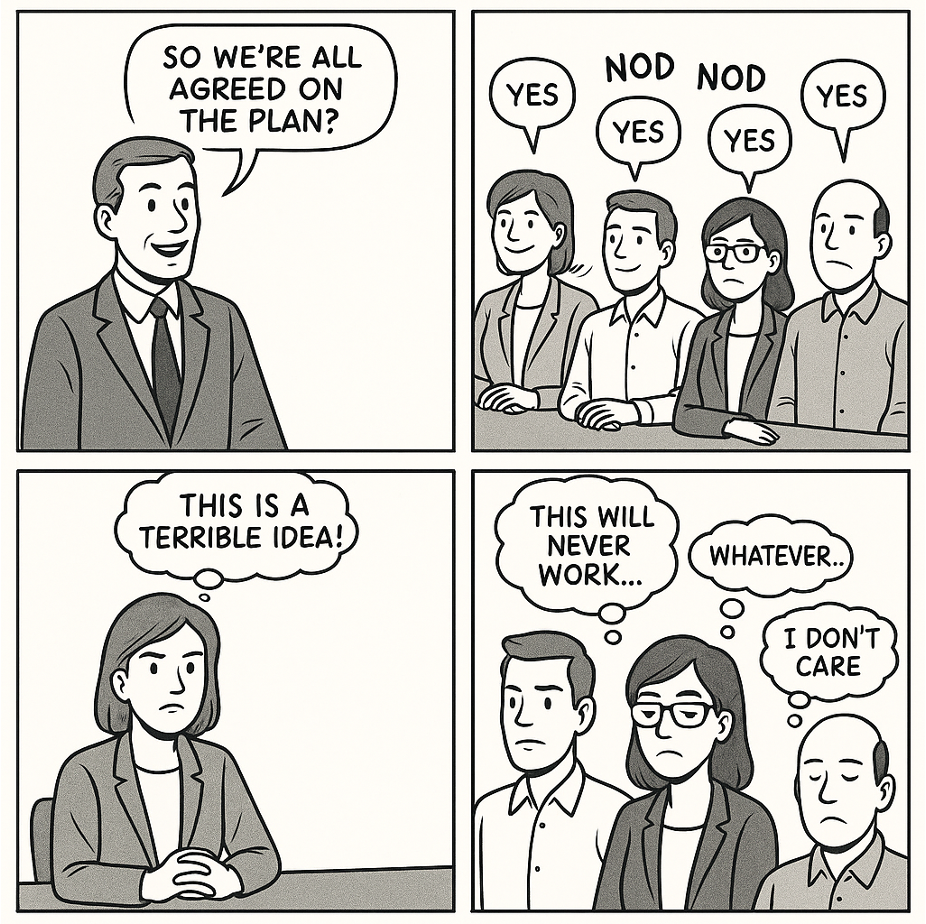
Leaders are often hired and trained to lead from the front. But strategic planning is one of the rare moments where stepping back is not weakness; it’s wisdom.
Increasingly, research and experience point to the same conclusion: leaders are often better served by enlisting an external facilitator, particularly in the early phases of strategy work.
The Harvard Business Review highlighted how power dynamics shape group conversations noting that people routinely self-censor in the presence of authority, often unconsciously, saying what feels safe in the group rather than what is true, unique, controversial or confusing. This dynamic can quietly distort strategy long before decisions are ever made. You want, and need, everyone to contribute all of their ideas to eventually get the best ones on the table.
I saw this firsthand in recent work with my own board. We hired an external facilitator to guide the conversation. Instead of managing airtime, framing questions, or steering outcomes, I was free to listen deeply. I could watch body language, notice when energy rose or drained from the room, and see which ideas landed, and which were politely tolerated. I asked clarifying questions, but mostly I observed and discerned themes. The result was a far clearer picture of where alignment truly existed and where it did not.
That experience reinforced several advantages leaders should seriously consider:
1. You reduce unintentional pressure.
Even the most relational, humble leader carries positional authority that comes from the power and influence you hold within the organization, or the knowledge and expertise you have in your business which might intimidate others. When you facilitate, your presence shapes responses often more than your words. An external facilitator lowers the social cost of dissent.
2. You gain access to richer data.
When you’re not managing the process, you can read the room. Facial expressions, silence, side glances, posture — these are often more revealing than spoken agreement.
3. You separate listening from defending.
Facilitating while also being responsible for outcomes makes it harder not to defend past decisions or steer toward preferred conclusions. Stepping back allows genuine curiosity.
4. You protect psychological safety.
Research on psychological safety shows that people speak more honestly when leaders are not perceived as evaluators in the moment.
5. You model confidence, not control.
Ironically, choosing not to lead the process signals strength. It communicates trust in the board or team, and confidence that truth matters more than optics.
The image above captures the risk leaders must be wary of: visible agreement paired with invisible resistance. Heads nod, “yes” is spoken, but internally, people are disengaged, unconvinced, or quietly opposed. Strategy built on that foundation rarely holds.
Wise leadership is not about being at the center of every conversation. Sometimes, the most strategic move is stepping aside so you can finally see what’s really happening.
 Traverse
Leave a comment